
The Dohne - The True Dual Purpose Breed

EweThe Dohne is a dual-purpose breed developed by the South African Department of Agriculture using Peppin–type Merino ewes and German Mutton Merino sires. The progeny were interbred and selected for high fertility, rapid lamb growth rate and fine wool under commercial pastoral conditions.

The breeding program was initiated in 1939 and the Breed society was formed in 1966. Selection since 1970 has been done with the aid of performance and progeny testing.

Comprehensive production records in respect of all recorded animals are maintained in a computerised flock recording scheme.
The introduction of the Dohne to Australia in 1998 has continued the united approach to breeding initiated in South Africa.  The Australian Dohne Breeders Association (ADBA) was formed in October 2000 to provides strong and democratic grassroots breeding, education and promotion of Dohne.

The Dohne Today

The Dohne today is a well-balanced dual-purpose breed that allows the commercial producer to market both a quality heavy weight slaughter lamb and fine-medium white wool.
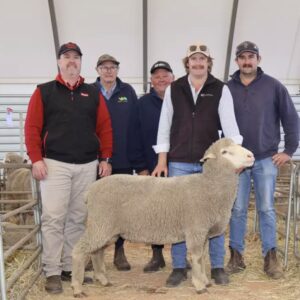
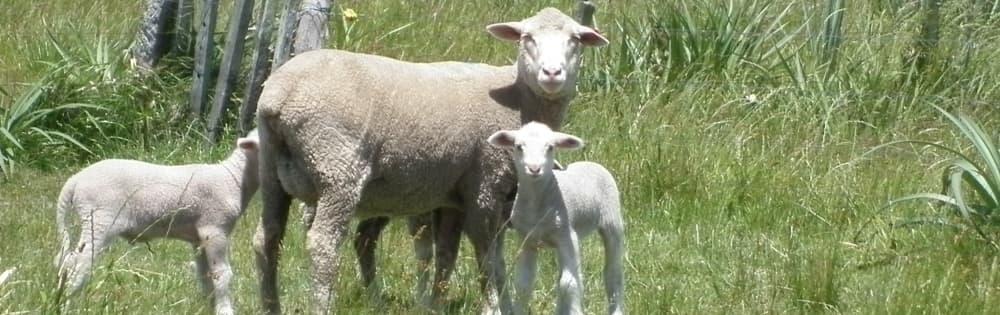
In general appearance the Dohne is naturally polled and plain-bodied.
The Dohne is one of the leading wooled breeds in South Africa and its percentage of the national flock is still climbing.
Following an original importation of 300 embryos to Australia there are now 1270 registered adult Dohne sheep and 48 registered ram breeders are established.  While the demand for flock rams presently exceeds supply the strict grading system ensures the highest quality control.

Production

High fertility (110 to 150%) is combined with rapid lamb growth rate (350 gm/day) up to weaning, making the Dohne a highly efficient meat producer.
Slaughter lambs can achieve a marketing weight of 50kg at 6 months of age.
Mature body weight of ewes varies from 55 to 65kg, depending on environment.
Ewes produce 5 to 6kg of high quality white wool of 18 to 22 micron.

Adaptability

Dohne easy care features include, excellent conformation, fleece rot and fly strike resistance.
The Dohne is adapted to a wide range of environmental and climatic conditions from intensive production to extensive arid rangeland. The Dohne has a wide dietary range and will browse.

The Dohne in Australia

Recent importations of frozen embryos from selected South African ewes into Western and Eastern Australia has enabled the Australian sheep producer to access the best production benefits offered by the Dohne breed.
Early F1 over-the-hook sales have produced export weight lambs attracting very favorable comments from processors, for excellent carcase composition and optimal (2-4) fat scores.
Premium prices are being received for lamb and wool sales – ask breeders for prices in your area.

Quality Assurance

Ram breeding flocks must be registered by the ADBA and use the Dohne “breed evaluation system”, which is owned and managed by the ADBA and serviced by ‘Advanced Breeding Services’.
The ADBA has established a full-pedigree performance evaluation and grading system that accounts for all traits. The Dohne is the only breed of livestock in Australia that requires its seed stock breeders to maintain and use full pedigree performance records.
The evaluation reports that result from the ADBA pedigree/performance records provide a practical efficient system to directly compare all registered ewes and rams across-ages and across-flocks.
Evaluation reports provide accurate identification of superior ewes and rams thus accelerating genetic improvement of the breed and allows ram breeders and commercial producers alike to confidently purchase a high quality genetic package that will maximise profitability.
An ADBA ‘Sale Certificate’ that reports a rams pedigree and performance verifies the QA system.


Hutchinson Software